

Most people order catering forwards: pick a menu, pay, hope. It works better backwards. Start from the minute the first guest lifts a lid and trace every step in reverse until you reach the booking form. Done this way, arranging a halal mini buffet singapore hosts can serve with confidence becomes a chain of seven or eight small decisions, each of which is easy on its own. Skip one, and it tends to announce itself at the worst moment, usually with fifteen hungry people watching.
The Moment the Lids Come Off
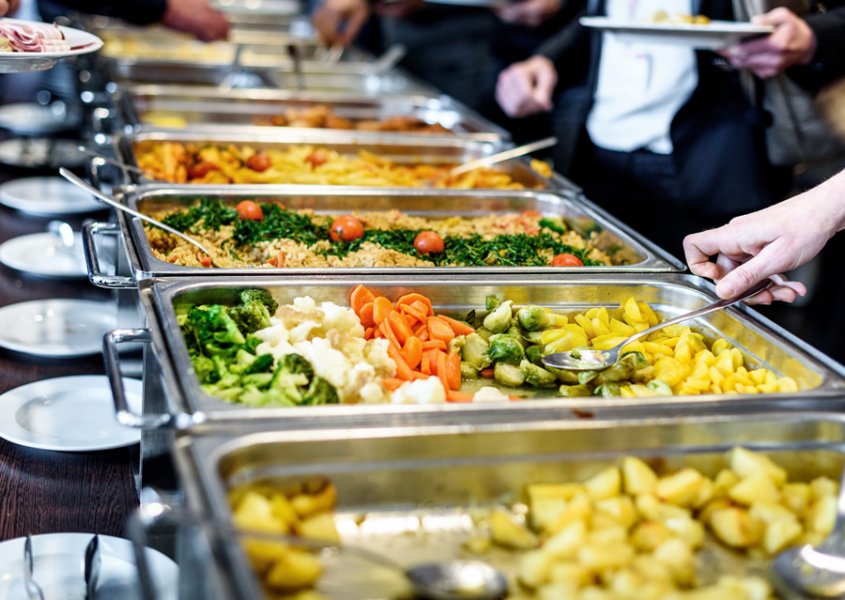
Picture the table at serving time. Are guests standing or seated? Is there a queue from one end, or can they reach from both sides? Do they have plates that survive gravy, and spoons for every tray? A mini buffet normally arrives as a compact set of disposable trays with basic cutlery, sized for a small group. The table itself is yours to arrange.
One Hour Earlier: The Handover
Step back sixty minutes. A driver is at your lift lobby with stacked trays. Who meets him? Does security need a name or vehicle number? Is there a loading bay, a goods lift, a time limit for parking? Deliveries are booked in windows, not to the minute, so someone must be free for the whole window with a phone that is answered. Give the caterer a contact who will actually be on site.
The Clock on the Label
Cooked food is safe at room temperature only for a limited period. Licensed caterers therefore mark each order with the time it was prepared and the time by which it should be eaten, typically a few hours later. Read that label when the trays arrive and plan around it. If your programme runs long, the food should not wait for the speeches. Serve first, talk after. Anything still on the table when the stated time passes belongs in the bin, not in takeaway boxes.
The Day Before: Counting Heads Honestly
Now go back a day. How many will truly eat? Invitations and appetites differ. Small sets are sold by headcount with a minimum number, and portions assume an ordinary meal, not a feast. If half your guests are teenagers or the event replaces dinner, order for a few more. If it is a mid-morning meeting, the stated number is usually enough. Browsing small-group halal buffet sets with your real figure in mind shows quickly which tier fits and which is wishful.
Three Days Out: Who Cannot Eat What
Halal status answers one question, not all of them. Among fifteen people there may be a vegetarian, someone avoiding beef, a child who refuses anything spicy and a colleague with a nut or shellfish allergy. Ask before you choose dishes, and ask the caterer which items contain common allergens. A balanced selection has at least one mild dish, one meat-free dish that is more than plain vegetables, and a staple that everyone can take.
A Week Out: Checking the Certificate
Further back still, before any menu is opened, comes the question that defines the order. In Singapore, halal certification is granted by Muis, and a certified caterer can show a current certificate for its kitchen. Look at the name on it and the expiry date. A sign saying no pork and no lard describes ingredients only. It says nothing about sourcing, handling or supervision, and Muslim guests are entitled to treat the two claims very differently. If in doubt, ask for a copy.
The Same Week: Lead Time and Dates
Kitchens plan purchasing and labour in advance, so orders close some days before delivery, and earlier around festive periods, school holidays and the fasting month when demand for evening meals rises sharply. Check the cut-off for your date before promising colleagues anything. Ask also what happens if numbers change after confirmation: some caterers allow a small adjustment up to a stated point, others fix the order once paid.
What the Price Includes and Leaves Out
Read the quotation as a list, not a total. The set price normally covers food and disposables. Delivery may be separate and can vary by location or time of day. Warmers, drinks dispensers, tablecloths, extra cutlery and collection of equipment may or may not be part of it. Some buildings charge for use of the goods lift. None of these is unreasonable, but they should be known before payment, so that the figure you report to your manager or family is the one finally charged.
After the Last Plate
The reverse walk ends where the event ends. Disposable trays mean no collection visit, which is the main convenience of this format, but it also means the rubbish is yours. Have large bags ready, separate food waste from clean packaging where your building recycles, and wipe the table before grease sets. In an office, check whether the pantry bin can take it or whether bags must go to a central point. Ten minutes of clearing leaves a better impression than the food itself.
Putting the Chain in Forward Order
Turned the right way round, the sequence is simple. Confirm certification. Check the cut-off date. Collect dietary needs. Fix an honest headcount. Read what the price covers. Name a person for the handover. Serve within the labelled time. Clear up properly. If you can tick all eight, place the order. If one is uncertain, resolve it first, because that is the link that will fail. A sensible next step is to compare compact halal buffet menus against your list and choose the closest match.

