

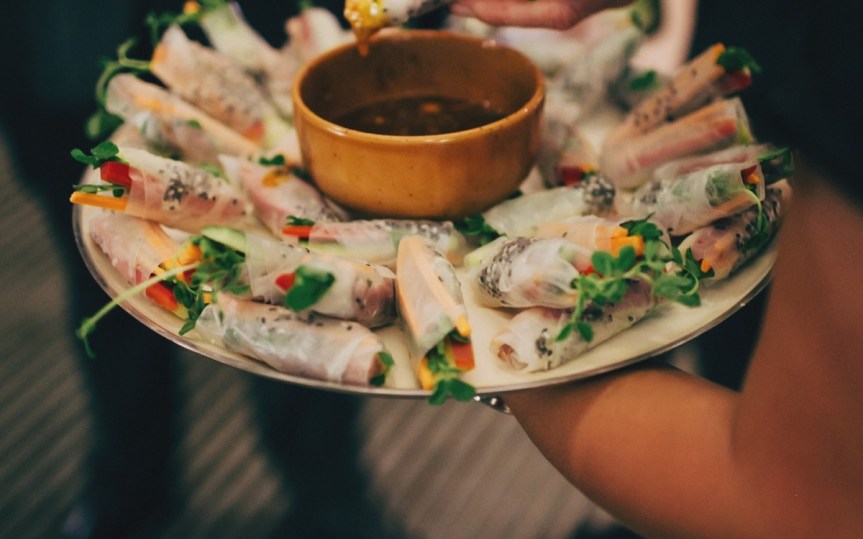
Every caterer will tell you they can do plant-based. Fewer can do it well, and the difference only becomes visible on the day when a hundred guests are looking at a buffet. Selecting vegan catering Singapore event organisers can rely on comes down to a handful of specific questions, and the answers separate the specialists from the kitchens improvising around a request.
Ask What They Do Regularly, Not What They Can Do
Any kitchen can produce a plant-based dish. What matters is whether they do it weekly for real events at real scale. Ask how many fully plant-based events they catered in the past three months and what the menus were. A caterer who runs this regularly has already solved the problems holding temperature without dairy, keeping tofu from going rubbery in a chafing dish, portioning so nothing runs out early. One doing it occasionally solves those problems on your event.
Look at the Menu Structure
Read a proposed menu and count the substantial dishes. If it is four vegetable sides, a rice and a salad, guests will leave hungry regardless of how good each item is. A properly constructed spread has two or three protein-forward centrepieces, a starch, vegetables prepared distinctly rather than all stir-fried, something with sauce, something crisp and something sharp for contrast. A caterer producing that structure without prompting understands the brief.
Test Their Knowledge of Hidden Ingredients
Ask directly how they handle fish sauce, belacan, oyster sauce, chicken stock, ghee, gelatine and honey. A caterer who works in this area answers immediately and specifically, naming which dishes those normally appear in and what they substitute. One who says everything will be fine has not thought about it. This single question is the most efficient screening test available and takes under a minute on a phone call.
Confirm Which Definition They Are Working To
Establish whether the requirement is vegan, ovo-lacto vegetarian, Buddhist vegetarian excluding the five pungent vegetables, or something stricter. Then confirm the caterer has understood it by asking what they would remove from their standard vegetarian menu to meet it. If garlic and onion are on the exclusion list and the proposed menu is built on both, you have found the misunderstanding before it becomes a problem at service rather than after.
Ask About the Kitchen, Not Just the Menu
Shared equipment matters to many guests. Ask whether plant-based items are prepared on separate surfaces with separate utensils, whether the same fryer oil is used for other products, and how dishes are kept separated in transport and on the buffet line. For guests avoiding animal products on religious or ethical grounds rather than for preference, this is not a detail. A caterer who has an established procedure will describe it without hesitation.
Insist on a Tasting Above a Certain Scale
Photographs and menu descriptions tell you nothing about seasoning, texture or how a dish holds after forty minutes in a chafing dish, which is the condition your guests will actually encounter. For any event of significant size or importance, taste the menu, and where possible taste it at the temperature and timing it will be served at. Reluctance to offer a tasting on a substantial booking is itself an answer, and so is a tasting presented on small plates that bear no relation to how the food will be served on the day.
Check They Can Handle the Whole Guest List
Few events are entirely plant-based, and a caterer who can only deliver one style creates coordination problems. Ask what else they provide and how the menus are designed to sit alongside each other, including allergy handling and any religious requirements. Where halal provision is also needed, established best halal catering singapore operators bring certification and process that a general kitchen cannot improvise, and it is far simpler when one provider covers both.
Check How They Handle the Venue
A caterer who asks nothing about the venue has not thought about delivery. Ask what they need to know, and a competent operation will want lift dimensions, loading access, power availability, water access, whether open flames are permitted and what the setup window is. They should also ask how far the drop-off point is from the room, because a long carry with chafing dishes changes their staffing. A caterer who takes the address and nothing else will discover the problems on the day, at which point they become yours.
Ask What They Do When Something Fails
Vehicles break down, staff call in sick and equipment fails, and the difference between caterers is entirely in what happens next. Ask directly what their contingency is and who you would call. An established operation names a backup vehicle, a relief driver and a mobile number that is answered outside office hours. One that has not considered the question will improvise on your event, and improvisation on a Saturday evening tends not to go well. This question takes thirty seconds and is among the more revealing ones available.
Read the Contract Before the Menu
Confirm the final headcount deadline, the cost of adding guests late, the cancellation terms, what is included in delivery and setup, whether staff are provided and for how long, and what happens to equipment collection afterwards. Establish who is responsible if the venue kitchen turns out to be less capable than assumed. Good vegan catering Singapore providers have clear answers on all of this because they have encountered every version of it before, and they will put those answers in the contract rather than leaving them as an understanding between two people who may not both be working on the day.

